Cost And Planning
Review cost drivers, service life, tax classification, and utility program questions before comparing written scopes.
Commercial Roof Coating Questions
Deer Valley Roof Coating coats commercial roofs for property owners, building owners, and facility managers. Use these answers to understand roof condition, coating chemistry, planning factors, work sequencing, and ongoing care before you request a scope discussion.
Five approved commercial roofing services
Condition-led coating recommendations
Phoenix permit scope must be confirmed
Monsoon season starts June 15
Find Your Roof Coating Answer
Start with the question closest to your building decision. Each group covers a different planning stage, from budget and chemistry through inspection, operations, and maintenance.
Review cost drivers, service life, tax classification, and utility program questions before comparing written scopes.
Compare Metal Roof Coating, Silicone Roof Coating, Acrylic Roof Coating, and other approved systems by roof conditions.
The approved service list includes Metal Roof Coating, Silicone Roof Coating, Acrylic Roof Coating, Spray Foam Roofing, and Shingle Roof Coating. Fit remains condition-led.
Learn what makes a roof coating candidate and why wet insulation, deck damage, or structural issues change the plan.
See how inspection, preparation, application, curing, access, and business operations fit together.
Plan around Phoenix weather, permit scope, post-storm checks, drainage details, rooftop traffic, and approved service areas.
Cost And Planning
Commercial coating budgets depend on the roof in front of you. These answers explain what changes the price, schedule, service life, and accounting conversation.
A coating can cost less than a full replacement when the existing roof remains sound enough for restoration. The work can avoid tear-off labor, disposal, and some operational disruption. The comparison changes when the roof has widespread wet insulation, a deteriorated deck, or structural problems. An inspection should separate coating work from repair or replacement work.
Commercial roof coating pricing is usually based on square footage and the work required before application. Roof size, access, roof type, roof condition, repairs, wet-insulation replacement, seam work, coating chemistry, specified thickness, and selected contract terms all affect the total. Ask for an itemized written scope that separates preparation, repairs, materials, and application.
A properly applied coating may last about 10 to 20 years in the Phoenix climate, depending on product, dry film thickness, exposure, and maintenance. Service life is a planning range, not a promise. A roof can be inspected, cleaned, repaired, and considered for recoating as the surface wears, provided the underlying assembly remains suitable.
Tax treatment depends on the building, project scope, accounting method, and current tax rules. A coating may be treated differently from a repair, maintenance item, or capital improvement. No tax result should be assumed from a roofing written scope. Ask your CPA how the work should be classified for your property and tax year before making a budget decision.
Coating Choice
The right chemistry follows roof condition, drainage, traffic, exposure, and recoat planning. A single product should not be treated as the answer for every commercial building.
The best fit depends on drainage, foot traffic, roof material, exposure, and budget. Acrylic is commonly considered for well-drained roofs, SPF, and metal. Silicone is commonly considered where ponding conditions require a compatible system. Polyurethane may suit higher-traffic or impact-prone areas. Final selection requires substrate, adhesion, moisture, and detail review.
Some coating systems are rated for ponding water, while others are not. Silicone is generally associated with ponding-water applications, and many acrylic products can break down faster where water remains for extended periods. A coating does not correct a drainage defect by itself. The roof assessment must review ponding, substrate condition, and the specified product limits.
A white, reflective coating can reduce roof heat absorption and may lower cooling loads on some large commercial buildings. Actual energy results depend on insulation, HVAC efficiency, conditioned floor area, occupancy, weather, and product properties. Treat any savings discussion as building-specific. Product reflectance and emittance data can support comparison, but they do not guarantee a utility result.
Utility incentives change over time, differ by service territory, and may require a qualifying product, documentation, or installer conditions. Confirm current business-program rules directly with the applicable utility before budgeting around a rebate. Product data, invoices, and installation records may support an application, but eligibility and payment are determined by the program administrator.
Roof Condition
Coating is a restoration option for suitable existing roofs. Inspection findings decide whether the next step is coating, repair, replacement, or a combination of those scopes.
A commercial roof coating is a fluid-applied acrylic, silicone, or polyurethane system that cures into a continuous membrane over a suitable existing roof. It can seal prepared seams and penetrations, reflect sunlight, and protect the surface from exposure. Coating is a restoration approach for a roof that can support the system after inspection and required preparation.
Many low-slope systems may be candidates when the structure is sound and the roof is mostly dry. Possible substrates include SPF, TPO, PVC, EPDM, modified bitumen, built-up roofs, gravel roofs after proper preparation, and metal roofs. Widespread wet insulation, a deteriorated deck, or structural problems may require repair or replacement before coating.
A candidate roof generally has a sound deck, mostly dry insulation, and an aging membrane that remains suitable for restoration. Review can include a visual inspection, core samples, and infrared or moisture scanning. Saturated or damaged sections may need removal and replacement before coating. The inspection should document what can be coated and what must be addressed first.
A coating can help stop leakage when the leak source is correctly located and repaired before application. Seams, flashings, drains, and rooftop penetrations need focused detail work. Coating over an unresolved leak or wet insulation can trap moisture and shorten service life. Leak control depends on the repair scope, substrate condition, detailing, and application quality.
Process And Operations
A commercial roof coating project moves from condition review to surface preparation, detail work, application, and final documentation. Building operations are part of the work plan.
Roof coating is applied from the top of the building, so many occupied commercial properties can continue operating during suitable work. The plan should account for business hours, loading docks, rooftop HVAC intakes, access routes, odors, noise, and material movement. Larger buildings may be divided into phases so property operations have a clear work area and sequence.
Many projects take several days to two weeks, depending on roof size, access, repairs, weather, and curing time between coats. A typical sequence includes inspection, moisture review, cleaning, repairs, seam and detail work, primer when required, base and top coats at the specified thickness, and final inspection. The roof and site conditions control the schedule.
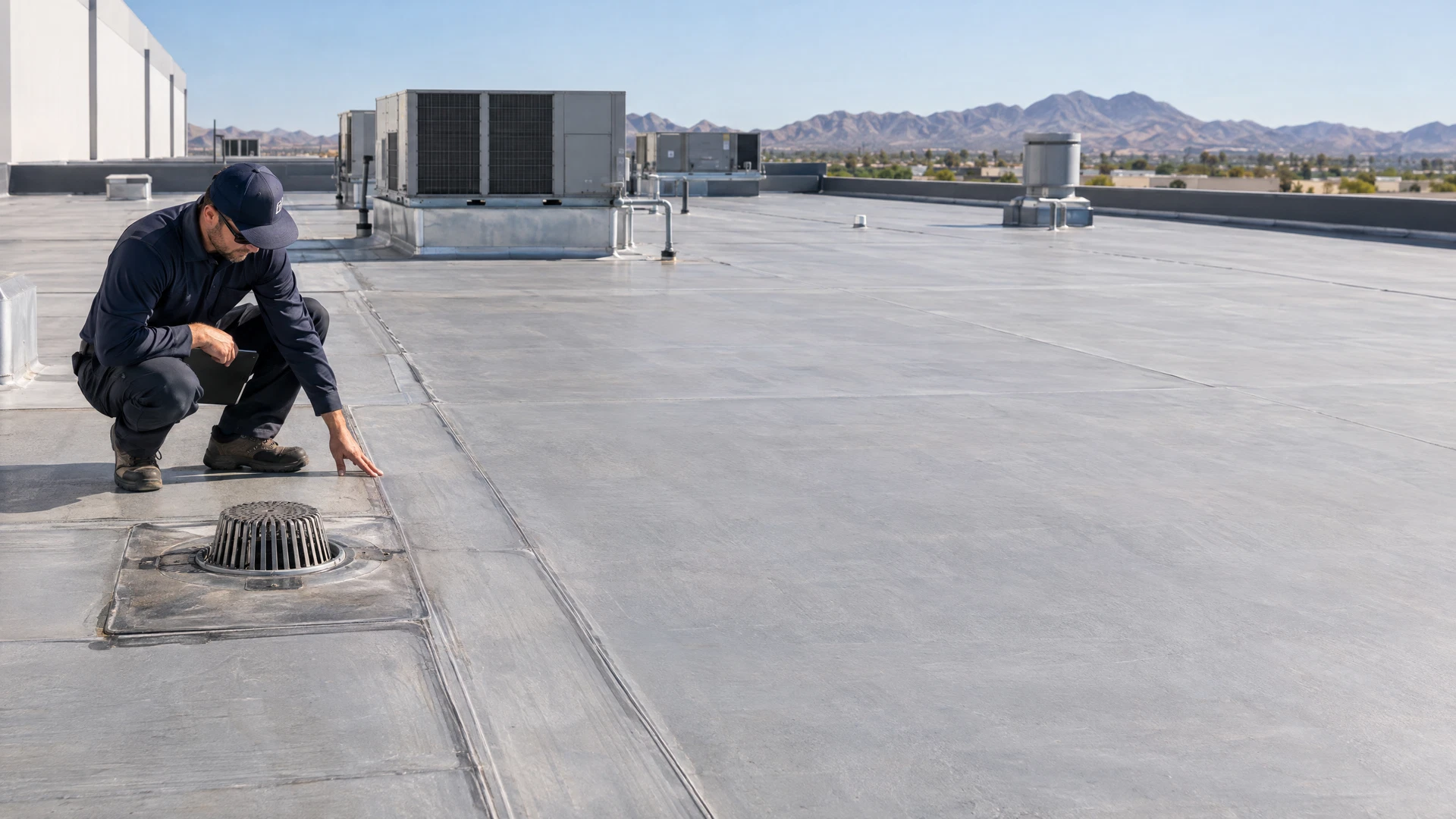
Begin with a visual inspection and condition review. Identify roof type, access points, rooftop equipment, drains, penetrations, seams, blisters, visible damage, and areas that need closer moisture investigation. The goal is a clear coating, repair, or replacement decision for each roof area before materials are selected.
Remove dirt, chalking, and debris with the cleaning method suited to the substrate. Address approved repair items, prepare seams and penetrations, and verify that the surface is ready for adhesion. Preparation is part of the coating system, not an optional cosmetic step.
Apply primer where the substrate requires it, then install the specified base and top coats at the required dry film thickness. Protect rooftop equipment and coordinate access while the work area is active. Weather and product instructions guide application and curing decisions.
Complete a final inspection of coverage, details, seams, penetrations, equipment interfaces, and visible repair areas. Keep product information and project documentation with the building records. Future inspections can then compare wear, damage, maintenance needs, and recoat considerations against the original scope.
Local And Maintenance
Phoenix weather, permit scope, rooftop traffic, and maintenance affect the roof after application. These answers help facility teams plan the next inspection and keep records current.
Spring and fall often provide more moderate conditions for coating work and curing. Planning before the official Phoenix monsoon season can place attention on seams and penetrations before heavier storm exposure. Summer work may be possible, but product temperature limits, early work windows, surface heat, and weather conditions must be reviewed for the specific system.
Permit requirements depend on project scope. City of Phoenix guidance includes specific exemptions and limitations, so a roof restoration coating should be reviewed against current city requirements before work begins. A permit question cannot be answered from the word coating alone. Confirm the scope with the City of Phoenix Planning and Development Department.
Warranty terms vary by product, application scope, maintenance requirements, and the agreement governing the work. Some industry warranty structures address materials, labor, or both, with inspection and maintenance conditions. This page does not promise a warranty. Ask for the exact written terms, exclusions, required upkeep, and party responsible for each obligation before signing.
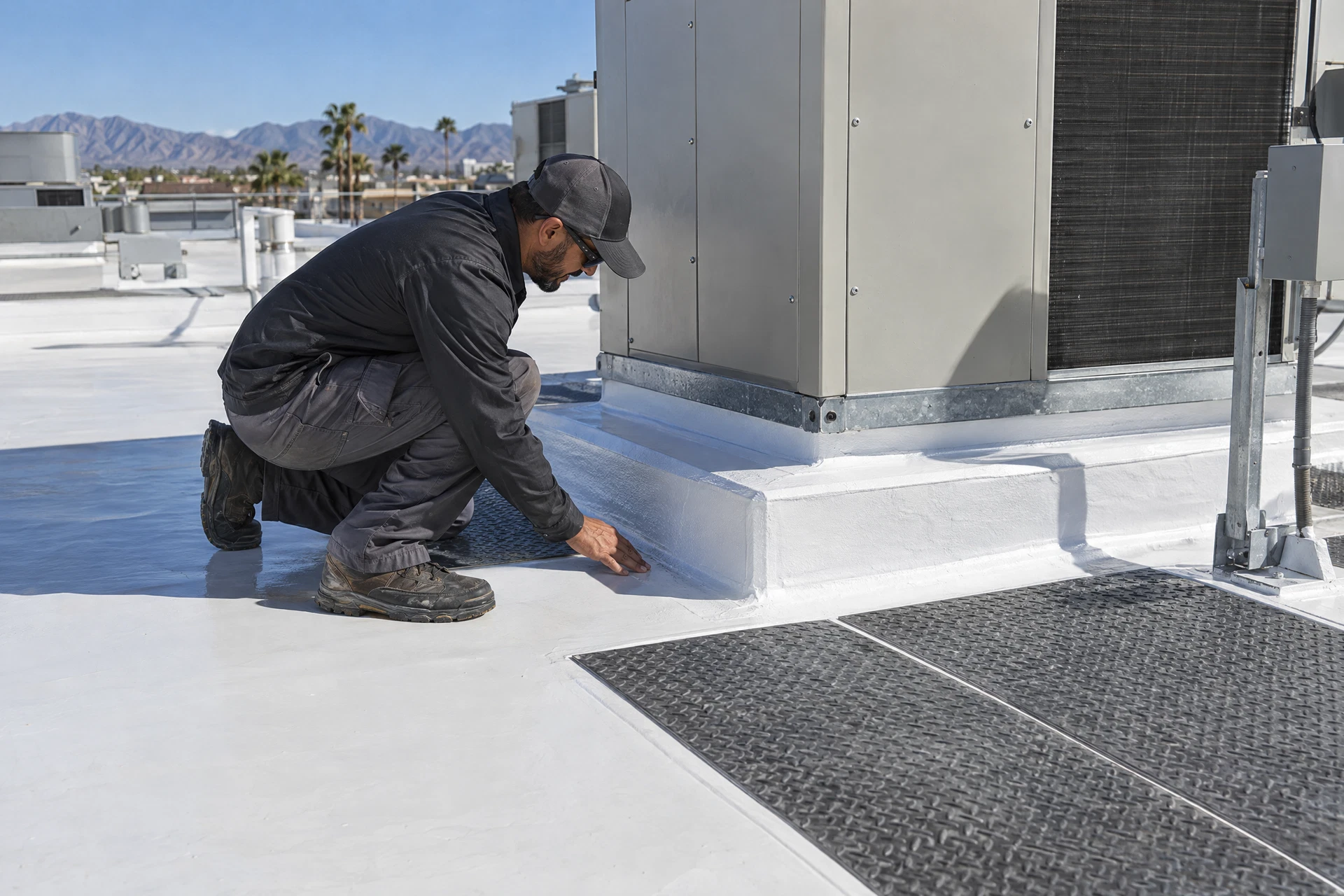
Plan a professional inspection at least annually and after major monsoon storms. Keep drains, scuppers, and gutters clear. Add walk pads where rooftop service routes create traffic. Ask rooftop contractors to report damage. Repair punctures, bird damage on foam roofs, and worn areas promptly. Rinse heavy dust buildup when appropriate to help maintain surface reflectivity.
Deer Valley Roof Coating focuses this service coverage on North Mountain, North Gateway, Desert View, Anthem, New River, and Desert Hills. Availability and project planning still depend on the building, roof size, access, condition, and work requirements. Share the property location and roof details to determine whether the requested scope fits the service area and site conditions.
Plan The Next Roof Decision
Bring your roof questions, building constraints, and inspection priorities into one clear conversation.